

Analytical & Microbial Sciences
Microbiology
Sterility, endotoxin and environmental monitoring against ISO, USP and OECD methods
- Key capability
- GLP · NABL
- Listed methods
- 43
- Guidelines
- 19
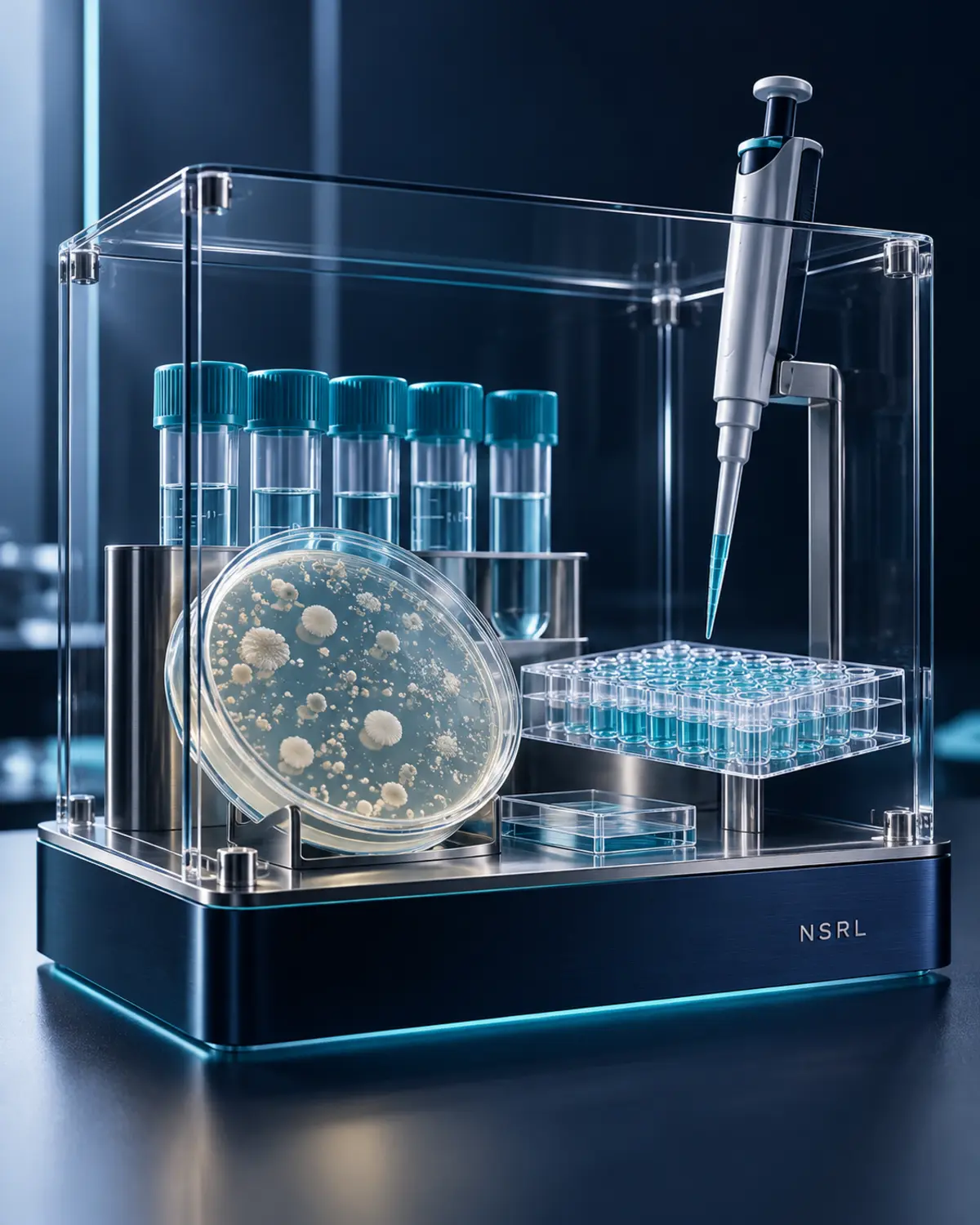
The microbiology division is certified by NGCMA for GLP and accredited by NABL to ISO/IEC 17025, and operates under Good Laboratory Practice with recognition from the FDA and EMA.
Its method set is deliberately standard-anchored. Sterility runs to ISO 11737-1:2018 and USP 71; endotoxin to USP 85; microbial limits to ISO 4833-1:2013; susceptibility to ISO 20776-1:2019. Naming the method is how a result travels across borders intact.
Alongside routine release testing, the division carries preservation efficacy challenge testing, biofilm and water testing, cleanroom monitoring, and cleaning and sanitisation validation — the work that keeps a manufacturing site inside its own specification.
Overview
Microbiology, in overview.
Discipline group
Analytical & Microbial Sciences
Capability groups
7
Capabilities
Seven capability groups. 43 listed methods.
Every method below runs inside the same quality system, against the same archive, with the same chain of custody. Study designs are assembled from this catalogue rather than improvised around it.
- Culture-based identification of bacteria, fungi and yeast
- Molecular techniques — PCR and DNA sequencing
- Phenotypic and biochemical characterisation
- OECD Guideline 107
- ISO 7218:2007
- Susceptibility determination
- Minimum inhibitory concentration (MIC) testing
- Disk diffusion — Kirby-Bauer
- Broth dilution method
- Etest method
- ISO 20776-1:2019
- Membrane filtration method
- Direct inoculation method
- Growth promotion testing
- Viable microorganism enumeration
- Total aerobic microbial count
- Total yeast and mould count
- ISO 11737-1:2018
- USP 71
- ISO 4833-1:2013
- Bacterial endotoxin detection and quantification
- LAL assay
- Chromogenic and turbidimetric methods
- USP 85
- Air, water, surface and equipment testing
- Total viable count
- Indicator organism detection
- Cleanroom monitoring
- Cleaning and sanitisation validation
- ISO 14698 series
- Preservation efficacy evaluation
- Product inoculation studies
- ISO 14698-1:2003 and ISO 14698-2:2003
- OECD Guideline 471
- ISO 10993-1:2018
- ASTM E2111-18
- ASTM E2562-20
- ISO 22196:2011
- ISO 6222:1999
- ASTM D5465-21
- ISO 10381-1:2002
- OECD Guideline 473
- ISO 10993-3:2014
Specifications
On the record.
Guideline numbers, test species and instrument names are reproduced exactly as the laboratory publishes them, because a method is only portable across borders if it can be named precisely.
Guidelines worked to
19 on file- USP 71
- USP 85
- ISO 7218:2007
- ISO 4833-1:2013
- ISO 6222:1999
- ISO 11737-1:2018
- ISO 20776-1:2019
- ISO 22196:2011
- ISO 14698-1:2003
- ISO 14698-2:2003
- ISO 10993-1:2018
- ISO 10993-3:2014
- ISO 10381-1:2002
- ASTM E2111-18
- ASTM E2562-20
- ASTM D5465-21
- OECD 107
- OECD 471
- OECD 473
Under accreditation
What governs this work.
Microbiology operates inside the quality system audited under the certifications listed here.
- OECD GLP
- NABL
Good Laboratory Practice certification
OECD GLPNGCMA, Department of Science and Technology, Government of India
Compliance with OECD Principles of Good Laboratory Practice, the basis on which study reports are accepted across all OECD Mutual Acceptance of Data countries.
View the certificateISO/IEC 17025:2017 accreditation
NABLNational Accreditation Board for Testing and Calibration Laboratories
Technical competence of the testing laboratory against the international standard for testing and calibration laboratories.
View the certificate
Runs alongside
Nothing here works alone.
Most programmes cross three or four divisions. On one campus, under one quality system, that crossing costs a corridor rather than a shipment.
- 03ChemistryAnalytical chemistry that underwrites every other division's numbers
- 01ToxicologySafety studies evaluating acute and longer-term effects, including toxicity, irritation and sensitisation, to support product safety and regulatory assessment
- 07Custom StudiesFor the programme no standard guideline was written to cover